Property Guides
Joint venture with a developer in Dhaka: a landowner’s guide
A practical guide for Dhaka landowners on land sharing with a developer, from how your share is calculated to the papers you need and the clauses worth negotiating.
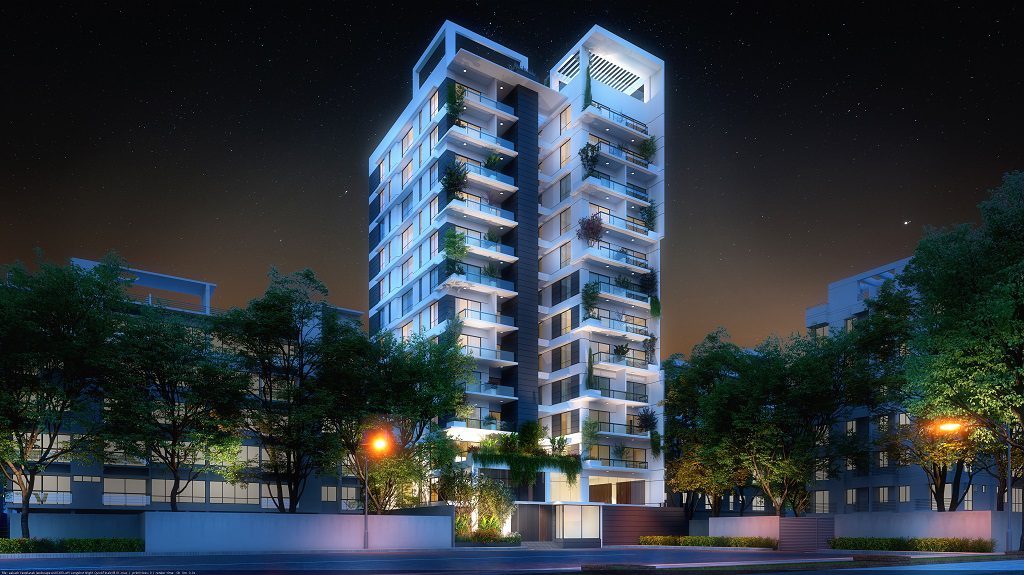
If your family owns a plot in Dhaka, a developer has probably already asked about it. Land in Gulshan, Banani, Dhanmondi, Baridhara and Bashundhara is scarce, and most new apartment buildings in these areas rise through a joint venture between a landowner and a developer. People in Dhaka usually call it land sharing.
The idea is simple. You contribute the land. The developer pays for design, approvals and construction. When the building is finished, the apartments or floors are divided between you and the developer in a ratio both sides agreed at the start. The developer sells its share to recover its costs and earn a profit, and you keep yours.
Simple on paper, a joint venture still runs for years and involves the most valuable asset many families own. The agreement you sign decides how many square feet you receive, on which floors, by what date, and what happens if something goes wrong. This guide walks through each part of the process, from how your share is calculated to the documents you need and the clauses worth negotiating. Aakash Developments has built residential and commercial projects in Dhaka since 2015, and these are the questions landowners ask us most often.
The legal framework for a joint venture
Joint ventures in Dhaka real estate are governed mainly by the Real Estate Development and Management Act, 2010, and the rules made under it in 2011. The Act requires the landowner and the developer to sign a registered agreement, and it obliges the developer to follow the conditions of that agreement. Everything else in the relationship flows from this one document.
Alongside the agreement, the landowner usually signs a registered power of attorney in favour of the developer. Under the Power of Attorney Act, 2012, a power of attorney that deals with the sale or transfer of land has to be registered. This document lets the developer apply for approvals on your behalf, deal with utility companies and sell the units that fall in the developer’s share. A well-drafted power of attorney is limited to those purposes. It should never give the developer the right to sell or mortgage the units allocated to you.
Why many landowners choose a joint venture
Building a ten-storey apartment block on your own takes large capital and years of supervision. You would need to hire architects and structural engineers, obtain RAJUK approvals, manage contractors, buy steel and cement through price swings, and then sell or rent the units yourself. Few families have the time or the cash for that.
Selling the land outright gives you one payment, and you give up any gain from the building that later stands on it. A joint venture sits between the two. You give up part of the future building, and in return you receive finished apartments without spending your own money on construction. For a family with several heirs, it also offers a clean way to turn one plot into separate flats that each heir can own.
Joint ventures are also how most plots in central Dhaka get rebuilt. Many houses in Gulshan and Dhanmondi were built decades ago as two- or three-storey homes. Current building rules allow far more floor area on the same land, so the old house uses only a fraction of what the plot can legally hold.
How your share is decided
The ratio between landowner and developer is the first number every landowner asks about. There is no fixed formula and no government rate. Ratios are negotiated plot by plot, and two developers can make quite different offers for the same land. Knowing what drives the number helps you judge whether an offer is fair.
Floor area ratio under the DAP
The biggest factor is how much floor area the law allows on your plot. The Detailed Area Plan (DAP) for Dhaka, gazetted in 2022, controls this through the floor area ratio, or FAR. FAR is the total floor area of a building divided by the area of the land. A FAR of 2.0 means the building can have twice as much floor space as the plot size.
Here is a simple example. One katha in Dhaka is 720 square feet, so a 5 katha plot covers 3,600 square feet. At a FAR of 3.0, the building can hold about 10,800 square feet of floor area. At a FAR of 5.0, it can hold about 18,000 square feet. The exact figure also depends on setbacks, open space, parking and the width of the road in front of the plot, so treat these numbers as illustrations only.
FAR rules changed recently. According to The Daily Star, a draft amendment in August 2025 proposed raising FAR in 68 zones, with Khilkhet going from 2.0 to 4.4 and Mirpur DOHS from 2.5 to 4.8, while Gulshan-Banani would move slightly down from 5.7 to 5.5 and Dhanmondi from 5.1 to 5.0. The Business Standard reported that the DAP advisory committee approved the amended plan on 19 October 2025, raising permitted building heights and FAR in almost all areas under RAJUK. Figures can shift between a draft and the final gazette, so ask an architect to confirm the FAR that applies to your exact plot before you negotiate.
Other factors that move the ratio
Location sets the selling price of the finished flats, and that price decides how much the developer can afford to give you. Plot size and shape matter because a narrow or irregular plot produces less efficient floor plans. Road width affects permitted height and the access construction equipment needs. The specification level counts too. A building with two basements, imported lifts and premium finishes costs more per square foot to build, which leaves less room in the ratio.
Upfront cash trades against your share. A developer that pays a large signing amount or a high monthly rent during construction will usually offer a smaller share of the building, and a developer offering a bigger share will usually pay less upfront.
Compare offers in square feet
Percentages can mislead. Fifty percent of a nine-storey building is less than forty-five percent of a fourteen-storey building on the same plot. When you compare offers, ask each developer to put in writing the total buildable area it has calculated, the exact square footage you will receive, the number of units, which floors those units sit on, and how many car parking spaces come with them. Then compare like with like.
Signing money and rent during construction
Most Dhaka joint ventures include a signing money payment, made when the agreement is executed. Clarify in writing whether this amount is adjustable, meaning it will be deducted from your share later, or non-adjustable, meaning it is yours to keep. Clarify the payment schedule as well, since some developers pay in instalments linked to approvals.
If you live on the plot, your family will need somewhere to stay while the old house comes down and the new building goes up. Developers commonly pay the landowner a monthly rent from the day the land is handed over until the new units are delivered. The agreement should state the monthly amount, the start date, the method of payment and what happens to the rent if construction runs past the agreed deadline. A clause that raises the rent after the deadline gives the developer a direct financial reason to finish on time.
Documents to prepare before you sign
A developer’s legal team will examine your ownership papers in detail, and gaps in the paperwork are the most common reason joint ventures stall. Gathering the documents early saves months. The core set includes:
- Title deeds for the land, along with the earlier deeds that show how ownership passed to you (the chain of title, often called bia deeds)
- Khatian records from the relevant land surveys, such as the CS, SA, RS and Dhaka City Survey records
- Mutation (namjari) and DCR in the current owner’s name
- Up-to-date land development tax receipts
- A non-encumbrance search from the sub-registry office showing no mortgage, sale or lien on the land
- The mouza map or a survey sketch showing plot boundaries
- For inherited land, the heirship documents and the consent of every heir
- National ID copies of all owners
Inherited land needs extra care. If a plot passed to several brothers and sisters, every heir must sign the agreement and the power of attorney, or authorise someone through a registered document. One heir who has not signed can block approvals or a sale years later.
Plots in Gulshan, Banani, Baridhara and Dhanmondi were originally allotted by RAJUK or its predecessor, the Dhaka Improvement Trust, on long-term lease. For these plots, RAJUK’s own records and permissions form part of the paperwork, and your lawyer should check them alongside the land office records. RAJUK’s services and contact details are on its official website, rajuk.gov.bd.
Mutation applications and land development tax payments now go through the Ministry of Land’s online systems, linked from land.gov.bd. If your mutation is old or still in a deceased parent’s name, start updating it now. The FY2026-27 budget made proof of income tax return submission mandatory for mutation of land and flats in city corporation, pourashava and cantonment areas, Prothom Alo reported, so every owner who will receive units should be filing returns.
Clauses that deserve your attention
A joint venture agreement runs to many pages. These are the sections where landowners most often lose value through vague wording.
Unit allocation
The agreement should list your units by floor, position and size in a schedule, ideally with the approved floor plan attached. Ask for a fair spread of floors. If every landowner unit sits low in the building and every developer unit has the better views higher up, your share is worth less than its square footage suggests. Many agreements alternate floors between the two parties or split each floor.
Car parking and common areas
Parking in Dhaka is valuable, and an apartment without a parking space sells and rents for less. State how many parking spaces you get and where they are. Clarify ownership of the roof, the ground floor and any community or prayer space.
Specifications
Attach a detailed specification schedule covering the structural system, brand and capacity of lifts, generator size, substation, tiles, sanitary fittings, doors, windows and kitchen fittings. Your units should be built to the same specification as the developer’s units. Vague phrases such as “standard quality” invite disputes later.
Timeline and delay compensation
State the completion date, any grace period and the compensation the developer pays for each month of delay. Under the 2010 Act, a landowner can claim compensation for delayed handover as set out in the agreement. If the agreement is silent on the amount, you have little to rely on.
Costs and responsibilities
The developer normally bears the cost of design, approvals, construction and utility connections for the building. Spell this out. Also state who pays for demolition, who keeps the salvage from the old house and who pays any tax arising from the transaction.
Dispute resolution and termination
Under the 2010 Act, disputes between the parties go first to mutual discussion and then to arbitration under the Arbitration Act, 2001. The agreement should name this process clearly. It should also say what happens if the developer fails to start work by a set date or abandons the project, including how the power of attorney is cancelled and the land returned to you.
After handover
A legal analysis published in The Daily Star notes that the 2010 Act requires the agreement to include the developer’s duty to maintain the property for at least one year after possession is transferred. Ask for clear terms on defect repairs and on how the building is handed over to the owners’ association.
Approvals and building rules
Once the agreement is registered, the developer applies to RAJUK for land use clearance and building plan approval. The design must follow the Bangladesh National Building Code 2020, published in the official gazette on 11 February 2021, which covers structural safety, fire safety, earthquake resistance and building services. The revised DAP adds its own conditions. The Business Standard reported that sewage treatment plants are now mandatory for plots of five katha or larger, and that construction is prohibited in areas classed as flood flow zones.
Approvals matter more than many landowners realise. The Financial Express reported in 2018, citing RAJUK data, that only 10.88 percent of about 416,000 structures built in RAJUK’s area over nine years from 2008 had formal approval, and just 173 had received occupancy certificates. A building without proper approval can face demolition orders, and its flats are harder to sell or mortgage. Ask the developer for a copy of every approval as it arrives, and make sure the building rises according to the approved drawings.
How to choose the right developer
A developer’s reliability is worth more than a few percentage points in the ratio. A generous offer means little if the building is delivered three years late.
Visit buildings the developer has already handed over and speak with the landowners and residents there. Ask whether the building was delivered on time, whether the specifications matched the agreement, and how the developer handled defects after handover. Check that the company is registered with RAJUK as the 2010 Act requires and is a member of the Real Estate and Housing Association of Bangladesh (REHAB). Count how many projects it is running at once and ask how they are financed. Find out who handles legal work and design, and whether those teams are in-house.
Some warning signs deserve attention: an offer far above every other offer for the same plot, pressure to sign quickly, reluctance to register the agreement, or a specification schedule that stays vague after you ask for detail.
A typical joint venture timeline
Every project is different, but most joint ventures in Dhaka move through similar stages. First comes discussion, a site survey and a feasibility study, after which the developer makes an offer. Document verification and drafting of the agreement follow. This can take a few weeks if your papers are complete and much longer if mutation or inheritance issues need fixing. After registration, the developer prepares the design and applies for approvals. Construction starts after demolition and piling, and a mid-rise apartment building commonly takes several years to complete. Handover comes last, with utility connections, the formation of the owners’ association and the transfer of your units.
Ask each developer for its estimated timeline in writing, and compare it with the delivery record of its past projects.
Joint ventures with Aakash
Aakash Developments entered the Dhaka real estate market in 2015. Our residential and commercial projects stand in eight neighbourhoods: Gulshan, Dhanmondi, Bashundhara, Banani, Baridhara, Lalmatia, Eskaton and Tejgaon. Gulshan alone has six Aakash projects, including Tower of Aakash and Aakash Lake Breeze. In Dhanmondi, Aakash Lake Park and Aakash Tranquil are under construction.
When Aakash develops a plot, building designs are submitted to and approved by RAJUK, and structures follow the Bangladesh National Building Code. Agreements, documents and architecture are handled by our in-house legal and design team, so the landowner deals with one company from the first meeting to handover. We use efficient construction methods and eco-friendly materials on site, and our service continues after the building is handed over.
If you own land in one of these areas or nearby, you can share your land details on our Landowner page. Our land development team reviews each submission and gets in touch to discuss a joint venture. You can also call 01879-336666, email info@aakashgroupbd.com or visit our head office at House 36, Road 13, Block D, Banani, Dhaka 1213.
Before you sign
A joint venture turns your land into finished apartments without you paying for construction, and it ties your family to one developer for years. Compare offers in square feet and read every clause with your own lawyer. Walk through the developer’s finished buildings before you decide. The right partner and a clear, registered agreement will protect your family long after the building is complete.
This article is general information for landowners and is not legal advice. Laws, DAP rules, fees and tax requirements change, so confirm current requirements with a qualified lawyer and RAJUK before signing any agreement.